Can Hyaluronic Acid Cause Dryness? A Detailed Look
Can Hyaluronic Acid Cause Dryness? I’ll be honest with you. For the longest time, I thought hyaluronic acid was basically skincare magic in a bottle. Everywhere I looked Instagram, beauty blogs, and even my local drugstore, it was marketed as the ultimate hydration hero. A serum with it? Sold. A cream with it? Count me in. I genuinely believed it was the missing link between me and glowing, glassy skin.
And then… reality hit. Instead of waking up with plump, dewy cheeks, my skin felt tight, dry, and, frankly, a little irritated. That’s when I had to pause and ask myself: Wait a minute, can this “hydration superstar” actually cause dryness?
If you’ve ever felt the same confusion (or side-eyed that glossy serum on your vanity), you’re in the right place. In this guide, I’ll walk you through why hyaluronic acid (HA) can sometimes backfire, how to use it properly, and what alternatives to try if it’s just not working for you.
(Related read: Check out my dry and sensitive skin care routine for more tips.)
What Hyaluronic Acid Really Is(Minus the Marketing Buzz)
Hyaluronic acid isn’t some mystical chemical invented in a lab—it’s actually a naturally occurring substance in our bodies. Technically, it’s a type of carbohydrate called glycosaminoglycan. Fancy word, right? All it really means is that it’s sugar-based and has a special knack for holding water.
Can Hyaluronic Acid Cause Dryness? Here’s where you can find it naturally:
- Skin: Keeps your complexion plump and hydrated.
- Eyes: In the vitreous humor, maintaining shape and supplying nutrients.
- Joints: In synovial fluid, providing lubrication.
- Connective tissues: Help tissues stay elastic and supported.
Think of HA as your body’s own hydration sponge. Without it, your skin loses volume, elasticity, and that smooth, supple feel we all love.
How Hyaluronic Acid Works in Your Skin
In the skin, HA lives mainly in the extracellular matrix “space” between your cells that keeps tissue structured and cushioned. Its main job? Grab water and hold onto it.
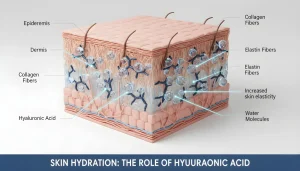
Hyaluronic acid can bind up to 1,000 times its weight in water. That’s why it’s famous for plumping the skin, smoothing out fine lines, and keeping everything elastic. But here’s the kicker: it doesn’t magically create water. HA either pulls it from the environment (humidity) or, if none is available, from deeper layers of your skin.
This dual role explains why HA can either leave your skin bouncy or make it feel dry, depending on how you use it.
Why Hyaluronic Acid Became a Skincare Celebrity
I still remember the first time I heard “hyaluronic acid.” My reaction: “Acid? On my face? Uh, no thanks.” Fast forward a few years, and it feels like HA is everywhere on skincare shelves, Instagram reels, you name it.
Here’s why it became the Beyoncé of skincare:
- It promises exactly what we want: Plump, dewy, “I woke up like this” skin. HA draws water into your skin, making it look fuller and healthier almost instantly.
- Catchy science: “Holds 1,000 times its weight in water.” Quick, memorable, and marketable.
- Safe for almost everyone: Dry, oily, or sensitive, most people can use it without worry.
- A simpler name: “HA” is way more approachable than “hyaluronic acid sodium salt molecules.”
- Influencer hype: Once celebrities started mentioning it, it spread faster than any TikTok trend.
- Trendy finish: Fits perfectly with the “glass skin” and “dewy dumpling” aesthetic everyone loves.
- Accessible everywhere: Serums, creams, primers, even shampoos and lip balms. You can’t avoid it if you tried.
In short, HA ticked all the right boxes: visible results, simple science, broad compatibility, and a touch of marketing sparkle.
Can Hyaluronic Acid Actually C ause Dryness?
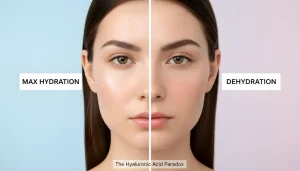
Here’s the irony: the ingredient marketed as the ultimate hydrator can sometimes leave your skin feeling parched. If you’ve ever applied HA and thought, “Why does my face feel tighter instead of softer?” you’re not imagining it.
Can Hyaluronic Acid Cause Dryness? Let’s break it down.
- How It Works (Science Made Simple)
HA is a moisture magnet. It grabs water from:
- The air: Works well in humid environments.
- Your skin itself: In dry air, HA can pull water from deeper layers to the surface, which then evaporates if not sealed in.
Result? Your skin might feel drier instead of plumper. It’s like attempting to fill a leaking bucket.
- The Humidity Factor
HA performs best when there’s moisture around. High humidity? Magic. Dry winter air or desert heat? Disaster. In dry climates, HA can literally pull hydration from your own skin—ouch.
- Not All HA Is Equal
- High molecular weight: Sits on the surface, forming a film to trap moisture.
- Low molecular weight: Penetrates deeper but can sometimes irritate.
- Ultra-low molecular weight: Experimental, not always compatible with every skin type.
Some products use blends, but cheaper formulas may rely on one type, leading to inconsistent results.
- Common Application Mistakes
- Slapping it on dry skin: HA grabs nothing but pulls water from deeper layers.
- Skipping moisturizer: No barrier = evaporation.
- Layering with drying actives: Retinol or strong acids can amplify dryness.
Correct approach: Apply HA to damp skin and seal with a moisturizer. Think sponge + plastic wrap = happy, hydrated skin.
- Concentration Confusion
More isn’t always better. A 2–5% HA serum doesn’t hydrate more than a 1–2% one; it might just sit sticky on your skin. Most dermatologists recommend 0.5–2% for the best results.
- When HA Backfires Most
- Cold, dry climates
- Compromised barriers (eczema, over-exfoliation)
- Using HA alone without sealing it
If you fit one of these categories, HA isn’t the villain—it just needs a better strategy.
How to Use Hyaluronic Acid for Maximum Benefits
After experimenting with HA, I realized it’s not just about the ingredient—it’s about how you use it.
Step 1: Start with Damp Skin
After cleansing, leave your face slightly damp. A hydrating mist or splash of water before applying HA gives it something to cling to.
Step 2: Use the Right Amount
2–3 drops of serum or a pea-sized cream. Spread evenly across face and neck. More isn’t better—stickiness is not the goal.
Step 3: Layer With Moisturizer
HA is the first layer; moisturizer is the lid that keeps it from evaporating. In dry months, add an oil-based product at night.
Step 4: Pay Attention to Climate
Humid summer days? HA feels magical. Dry winter mornings? Pair it with a heavier moisturizer or skip it temporarily.
Step 5: Don’t Overuse
One or two HA products max. More is not more.
Step 6: Choose the Right Formula
Look for multi-weight HA serums with added glycerin, ceramides, or soothing agents. Fragrance-free is ideal for sensitive skin.
Step 7: Adjust to Skin Needs
Some weeks I use HA daily; other weeks I cut back if my skin feels sensitive.
Quick Recap:
- Cleanse and leave skin damp.
- Apply 2–3 drops of HA serum.
- Seal with moisturizer (and oil at night if needed).
- Adjust use based on climate and skin mood.
- Keep it simple—one or two HA products at most.
Can Hyaluronic Acid Cause Dryness? Mistakes That Make HA Backfire
- Applying to completely dry skin: pulls hydration from deeper layers.
- Skipping moisturizer: water evaporates, leaving tightness.
- Using HA in every step: toner + serum + cream = disaster.
- Going too high with concentration: 1–2% is plenty.
Signs HA Isn’t Working for You
- Tight, papery skin
- Flakiness or peeling
- Redness or irritation
- Skin feels worse after applying the product
This doesn’t mean HA is bad—you just need to tweak usage.
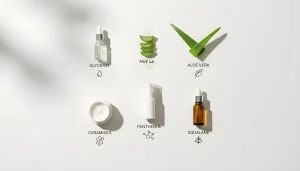
Alternatives If Hyaluronic Acid Isn’t Your Match
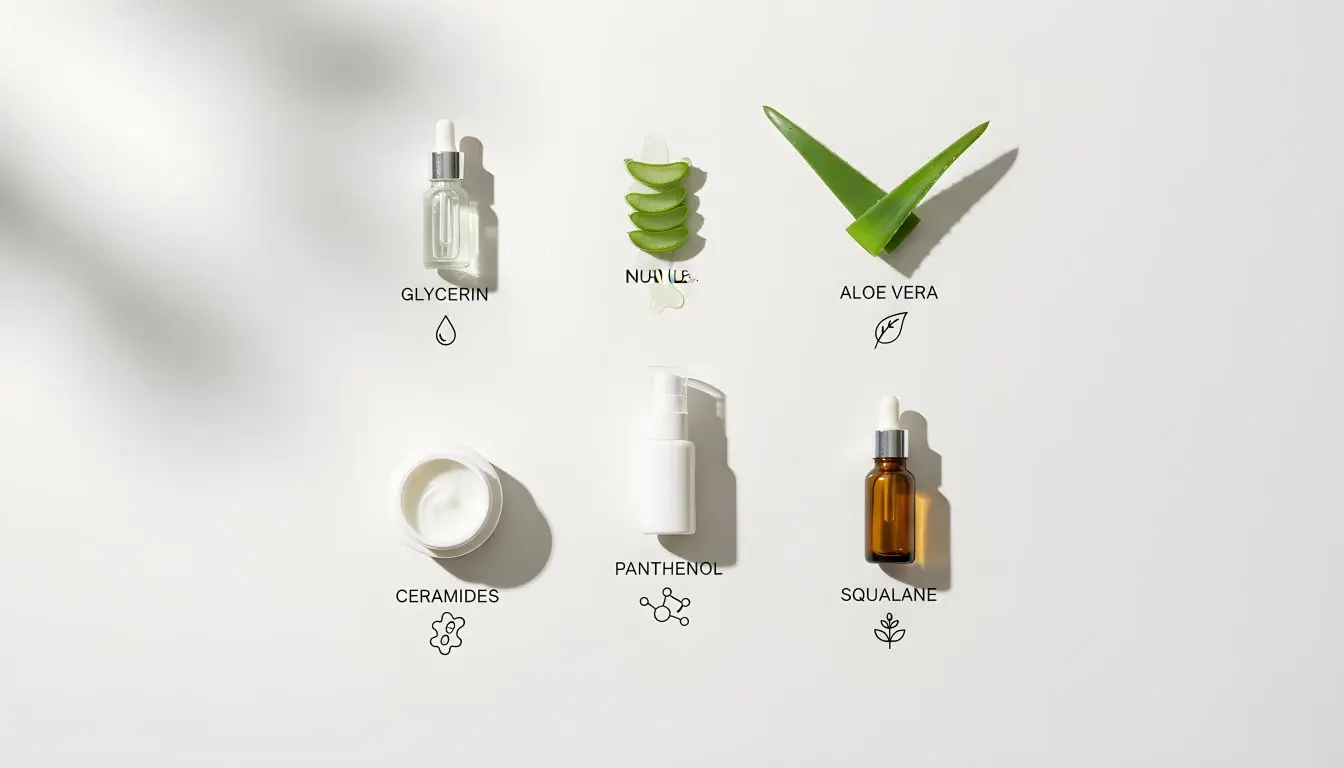
 Glycerin – The Classic Workhorse
If hyaluronic acid is the celebrity, glycerin is the underappreciated character actor who actually carries the whole movie.
- How it works: Like HA, glycerin is a humectant. It pulls water into the skin, but it’s a little more reliable in low-humidity environments.
- Why it’s good: It strengthens the skin barrier, smooths rough patches, and doesn’t evaporate as easily as HA.
- Best for: All skin types, especially dry and sensitive.
- Tip: Look for glycerin near the top of an ingredient list. It’s usually most effective at higher concentrations.
Panthenol (Provitamin B5) – The Soother
Panthenol is basically the comfort food of skincare.
- How it works: It binds and holds water while also calming irritation.
- Why it’s good: It hydrates and has anti-inflammatory properties, making it perfect if your skin feels cranky.
- Best for: Sensitive, redness-prone, or compromised skin barriers.
- Extra perk: Found in a lot of “recovery creams” because it helps heal and strengthen.
Aloe Vera – Nature’s Coolant
Aloe vera is more than just an after-sun hack.
- How it works: The gel inside aloe leaves contains polysaccharides that help lock in moisture.
- Why it’s good: Provides lightweight hydration, soothes irritation, and reduces redness.
- Best for: Oily, acne-prone, or easily irritated skin.
- Note: Pure aloe is great, but watch out for heavily fragranced “aloe gels” that can actually make irritation worse.
Sodium PCA – The Skin’s Own Hydrator
Your skin naturally makes this ingredient, which is why it feels so compatible.
- How it works: It’s a humectant, similar to HA, but smaller in structure and less finicky.
- Why it’s good: Super lightweight, deeply hydrating, and plays well with other ingredients.
- Best for: All skin types, especially those who find HA too sticky or drying.
Urea – The Multi-Tasker
Urea doesn’t get the marketing hype it deserves.
- How it works: It’s both a humectant (pulls in water) and a keratolytic (gently exfoliates).
- Why it’s good: Softens rough patches, hydrates, and improves overall texture.
- Best for: Extremely dry, flaky, or mature skin.
- Pro tip: Lower percentages (2–5%) focus on hydration; higher percentages (10%+) help with stubborn roughness (like on elbows, knees, or heels).
Beta-Glucan – The Skin Barrier Protector
Think of beta-glucan as a hug for your skin barrier.
- How it works: Derived from oats or fungi, it binds water while reducing irritation.
- Why it’s good: It’s more soothing than HA, with antioxidant benefits to boot.
- Best for: Sensitive, reactive, or post-treatment skin (like after peels or retinol).
Heparan Sulfate Analogues – The Luxury Option
Not as common, but very effective.
- How it works: Similar to HA in structure but with added anti-inflammatory effects.
- Why it’s good: Provides deep hydration without the evaporation issues HA sometimes causes.
- Best for: Aging or highly sensitive skin, if your budget allows (this stuff isn’t cheap).
Ceramides – The Moisture Lockers
Here’s the thing: pulling water into your skin doesn’t matter if it just escapes. That’s where ceramides shine.
- How it works: Ceramides are the “mortar” between your skin cells. They reinforce the skin barrier so hydration actually stays put.
- Why it’s good: Prevents water loss, repairs barrier damage, and works wonders in dry climates.
- Best for: Anyone dealing with dryness, sensitivity, or barrier damage.
Squalane – The Lightweight Oil Substitute
If your skin hates heavy oils but needs extra protection, squalane is your friend.
- How it works: It’s an emollient, which means it smooths and seals in hydration.
- Why it’s good: Non-comedogenic, super stable, and feels weightless compared to most oils.
- Best for: Oily or combination skin, or anyone who wants a moisturizer booster without greasiness.
Niacinamide (Vitamin B3) – The Overachiever
Technically not just a hydrator, but its benefits make it worth including.
- How it works: Improves barrier function, reduces water loss, and balances oil production.
- Why it’s good: Prevents dehydration and improves overall skin texture.
- Best for: Combination or oily skin types that need balance more than heavy hydration.
FAQs
- Can HA cause breakouts?
Usually not, unless dryness compromises your barrier. - Safe for sensitive skin?
Yes, if fragrance-free and moderate concentrations. - Daily use required?
A few times a week may suffice. - Serum or cream?
Serum penetrates fast; creams lock it in. - Mixing with other activities?
Safe with most, but avoid overloading your routine.
Final Thoughts
Hyaluronic acid isn’t a villain. Think of it like a friend who needs boundaries: applied right, it hydrates and plumps; misused, it can leave your skin drier.
The key: damp skin, sealed in with moisturizer, and moderation. If HA doesn’t work, don’t worry, hydration comes in many forms. With the right combo of humectants, barrier-support ingredients, and occlusives, you can achieve soft, healthy, and hydrated skin without chasing the trendiest ingredient